What condition is the system reporting?
Start by understanding what the control system actually detected instead of translating the code directly into a failed part.

An HVAC error code tells you what the system has detected - not necessarily which part has failed. In this episode of Talking Comfort LIVE, the team works through some of the most frequently searched error codes and explains how technicians can use those codes as a starting point for smarter diagnosis.
Originally presented on Talking Comfort LIVE: “The Troubleshooting Time Bomb: Diffusing 10 Error Codes in 45 Min.”
Error codes are useful because they narrow the field. They point toward a condition, circuit, sensor, communication problem, pressure issue, temperature issue, or other abnormal state the system has detected.
What they usually do not do is hand you the final diagnosis. The technician still has to verify the conditions that caused the code and determine whether the problem is the component itself, the environment around it, an installation issue, wiring, airflow, refrigerant conditions, or something else.
It is easy to see a familiar code and immediately associate it with the component that failed the last time. That is where experience can help - and where it can also get in the way.
A better question is: What condition is the system reporting, and what could cause that condition? That keeps the code in its proper role: a starting point for diagnosis.
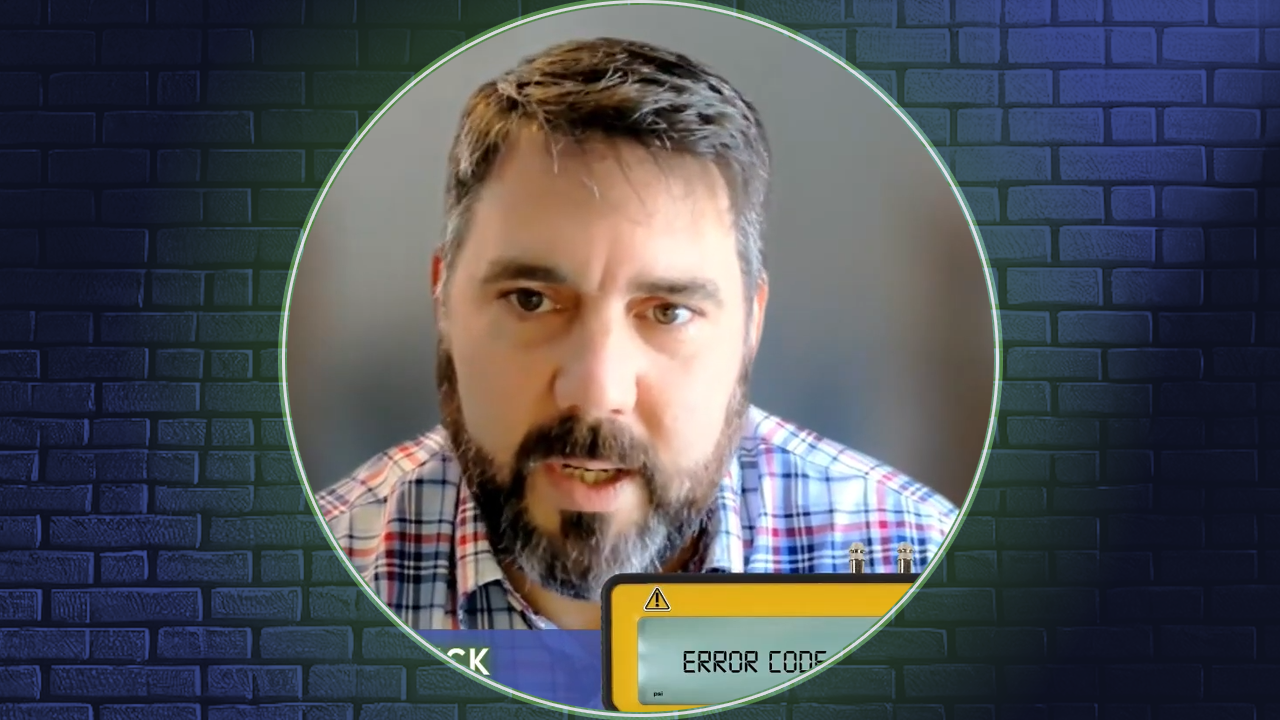
The code tells you what the system detected. The technician still has to determine what created that condition.
Talking Comfort LIVE • August 2026
Watch This Discussion → Starts at 2:46The August episode was shaped around actual Contractor PRO app search behavior. These were the 10 error codes technicians searched most often, with E6 generating substantially more searches than any other code.
| Error Code | Searches |
|---|---|
| E6 | 36.6% |
| F1 | 14.6% |
| F0 | 11.5% |
| E1 | 8% |
| H4 | 7.8% |
| E7 | 5.9% |
| H5 | 5.2% |
| H6 | 4.2% |
| E3 | 3.3% |
| H3 | 2.9% |

The search data shows where technicians are getting stuck - and where more diagnostic context can help.
Contractor PRO Search Data
Watch the Error-Code Discussion → Starts at 29:13A code may consistently point toward the same type of abnormal condition without always being caused by the same failed part. That is why the diagnostic process still matters.
Before replacing anything, verify the things that can create the condition: voltage, wiring and connections, sensors, airflow, refrigerant conditions, service valves, system setup, and the sequence of operation.

Don’t diagnose the part. Diagnose the condition that caused the code.
Talking Comfort LIVE
Watch This Discussion → Starts at 22:20Start by understanding what the control system actually detected instead of translating the code directly into a failed part.
Think beyond the obvious component: wiring, sensors, airflow, refrigerant conditions, voltage and setup may all matter.
Use measurements and the diagnostic sequence to eliminate possibilities instead of relying on what usually happens.
Before replacing anything, identify the measurement or test that confirms the suspected cause.
Not necessarily. An error code usually identifies a condition detected by the system. The technician still needs to test the possible causes of that condition before determining which component or system issue is responsible.
Because different problems can create the same abnormal condition. Wiring, sensors, airflow, refrigerant conditions, voltage, installation issues, or component failure can sometimes lead the control system to report the same code.
The most-searched issues included system communication failures, indoor temperature-sensor malfunctions, refrigerant leak protection, high- and low-pressure protection, mode conflicts on multi-zone systems, system and compressor overload protection, IPM module protection, and indoor airflow/fan problems. These searches show that technicians are frequently trying to understand not just a code, but the operating condition behind it.
Verify the condition behind the code by following the diagnostic sequence and checking the relevant operating data, voltage, wiring, sensors, airflow, refrigerant conditions, system setup, and other possible causes.
Watch the complete August conversation for the error-code breakdown, diagnostic context, field examples and contractor questions.
WATCH THE FULL EPISODETalking Comfort LIVE discussions and video excerpts may be referenced when sharing these insights with the HVAC community. Please credit Talking Comfort LIVE and link to this page.